Tag: Technology
-
Media and the Constitution of the Political
This project, supported by ICAS:MP, speaks to the following thematic engagements: Social Media, Data and Information Infrastructures This project looks at data and information infrastructures that have emerged from the rise of social media. Governments have been modernising data collection while addressing paper-based systems. Private companies work with a host of smaller intermediaries and advanced analytics…
-
Information and Society
This colloquium, early in the history of the Information and Society Research Cluster at Sarai-CSDS, posits that the ‘sensor-census-censor’ triad may be a useful way in which the histories and contemporary realities of South Asia and Europe may be investigated. Here, we mean the historic affinities, networks and resonances pertinent to the traffic of information…
-
Objects, Media Technologies, Aesthetics and Politics: Material Histories and Cultural Imaginaries, India c. 1940-1960
This project, supported by ICAS:MP, speaks to issues of archiving and memorialization by developing an engagement with a novel and underexplored terrain of historical experience. This is the world of objects as they bear testimony to major transformations in energy use, environment, travel, bodily health and cleanliness, registers of everyday life. We seek to attend to…
-
FLOSS – Free/Libre Open Source Software
Ever since its inception the Sarai programme of CSDS, Delhi was excited about and engaged with the free software practices in local and global contexts. We invited Richard Stallman to deliver a lecture on and published several books explaining the concept and practice. Our English and Hindi print publications have always been available online for…
-
Ethnographies of Social Data
Big Data and the Data Revolution have been pitched as a potential transformation of all modes of digital data collection, organization, storage, mining, analytics and visualization. The proliferation of digital infrastructures and information after the social media revolution called Web 2.0, has led to a global movement around leveraging the enormous potential of data to…
-
Publics and Practices in the History of the Present
Publics and Practices in the History of the Present (PPHP) emerged in the early years of Sarai to explore rapidly changing mediated urban milieux through questions of production, distribution and delivery, circulation, information networks, legality, and the materiality of media forms. Practitioners, artists, activists, lawyers, and academics engaged with these themes through ethnography, media practice, and…
-

Lives of Data Workshop – Report & Recordings
The ‘Lives of Data’ workshop, 05-07 January 2017, brought together a diverse group of interdisciplinary researchers and practitioners to reflect upon the historical and emergent conditions of data-driven knowledge production in India and South Asia. The workshop initiated wide-ranging conversations on history of statistics, media and computational cultures, politics and practices of data-driven governance, and…
-
Lives of Data Workshop – January 5-7, 2017
The Sarai Programme, CSDS is organising the Lives of Data Workshop on 5th to 7th January, 2017. The workshop examines the historical and emergent conditions of data-driven knowledge production and circulation in India and South Asia. In the context of the Data Revolution, the workshop links emerging research on the history of statistics, new/old technological…
-

The Attentive Heart and Its Apparatuses – Facebook, Bluetooth, WhatsApp
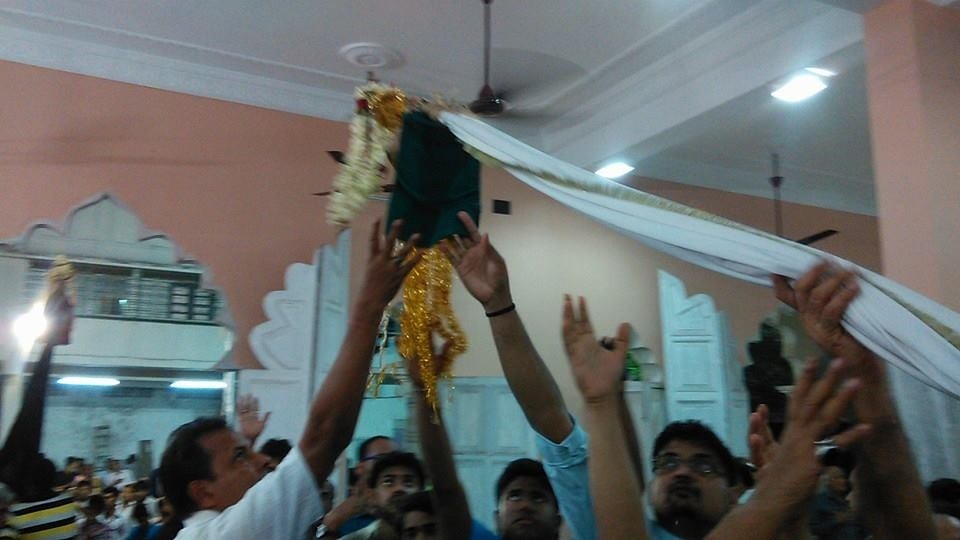
Ayesha befriended me at our Arabic preliminary class. An English literature student, she caught my eye in the university corridors as not many burqa-clad girls take admission in Jadavpur University. Recently, after five-six years when I found her using WhatsApp, we started exchanging messages. Last October, I was elated to see her using panjtan pak[1]as her display picture during Muharram. I thought I’d now get to know from a university educated woman what affect binds religion to technology. No, she was not a Shia but reaffirmed that “we, who claim to be Muslims, all mourn the death of Imam Husayn, the grandson of the Prophet. But, we, the Sunnis, do it differently. We are not so… physical”…
-

A Practice Perspective on Technologies Used in Transportation Studies: Introduction
In this post, Onkar Hoysala, one of the researchers who received the Social Media Research grant for 2016, introduces his proposed work.
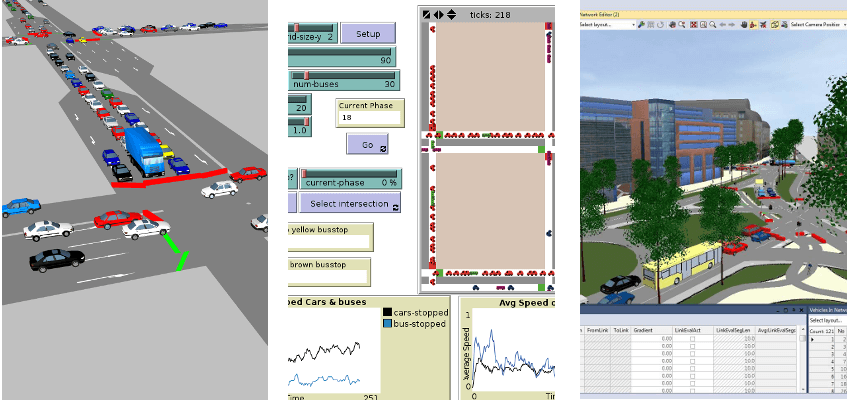
The significance of the transport sector in increasing productivity, reducing poverty and help achieve sustainable development goals, especially in rapidly urbanising areas, is well recognised (Asian Development Bank, n.d.; World Bank, 2014). Globally, there has been a push towards using computational methods and tools to help address issues in transportation, with international bodies such as the World Bank and Asian Development Bank pushing towards the use of technology and data management in helping…