Tag: Technology
-

Daily Mobile Recharges to Water Tankers: Deconstructing the Infrastructure of Insecurity
Packets of Diamond chips strung from store fronts are a common sight in Delhi’s peri-urban areas like Savda Ghevda or its dense informal settlements, but not in its formal colonies where larger brands such as Lays chips are found instead. The ‘pocket internet’ that thrives on small data recharge amounts for mobile phones that my previous posts have covered is marketed similar to the ‘sachet marketing’ of Diamond chips. Moreover, economic trends indicate that at least in rural India, these small but regular amounts being spent on internet have even begun to eat into the profits of consumer items such as chips and cold drinks…
-

The Quest for Bodoland: Social Media in the Time of a Separatist Movement – Part Two
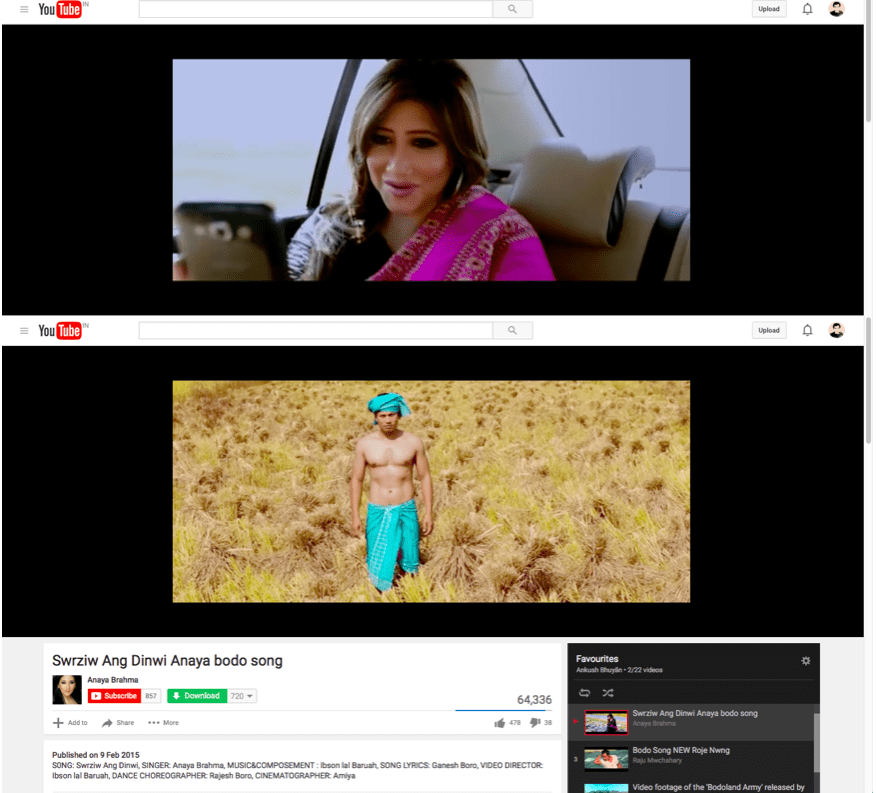
This is the second part of my two-part exploration of the Bodo community and its engagement with social media and the online world. This post builds on the first part where the focus of investigation was on the insurgency and the presence of reports, pictures, discussions, videos on social media pertaining to this.[1] This post will explore the presence of Bodo entertainment content, VCD films and music videos on websites like YouTube, and shared via social media. The focus will be on the kind of content that is shared as well as on specific content, exploring the links and connections that go into the production of a Bodo identity through the medium of the Internet, and the ways in which media today aids in the scattered explosion of such ideas and beliefs…
-

Mapping Sharing Networks and Cyber Corners in Informal Settlements
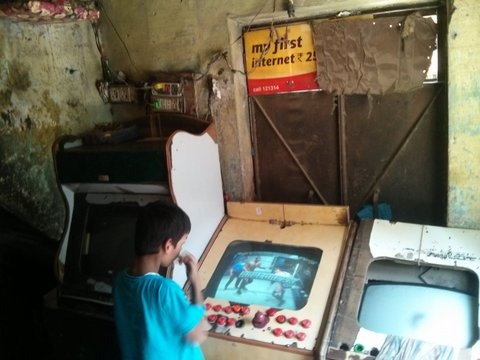
I missed it the first time I passed by it. As if by Rowling magic, the game parlor appeared before me the second time I looked for it because this time I knew where to look, thanks to the two boys who enthusiastically kept pointing at it from their end of the street. One moment I am in the narrow, sunny lane of the Bhoomiheen camp in Govindpuri and the other, in a dark and dingy room filled with young boys exchanging expletives who are as surprised to find me in the midst of them as I am at first. After convincing them I am not lost, I am able to strike up a conversation with them on their favorite games…
-

The Attentive Heart and Its Apparatuses – Facebook, Bluetooth, WhatsApp
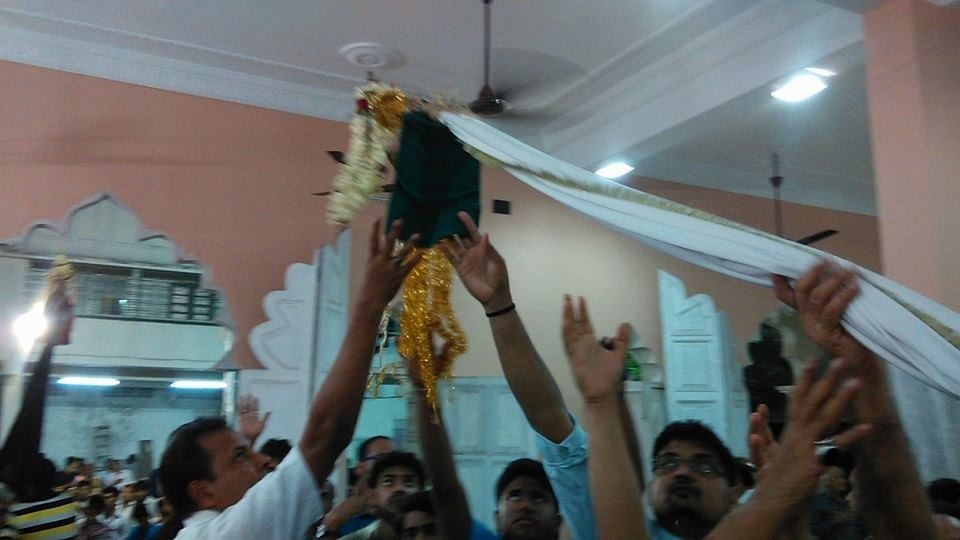
Ayesha befriended me at our Arabic preliminary class. An English literature student, she caught my eye in the university corridors as not many burqa-clad girls take admission in Jadavpur University. Recently, after five-six years when I found her using WhatsApp, we started exchanging messages. Last October, I was elated to see her using panjtan pak[1]as her display picture during Muharram. I thought I’d now get to know from a university educated woman what affect binds religion to technology. No, she was not a Shia but reaffirmed that “we, who claim to be Muslims, all mourn the death of Imam Husayn, the grandson of the Prophet. But, we, the Sunnis, do it differently. We are not so… physical”…
-

The Case of the Missing Data
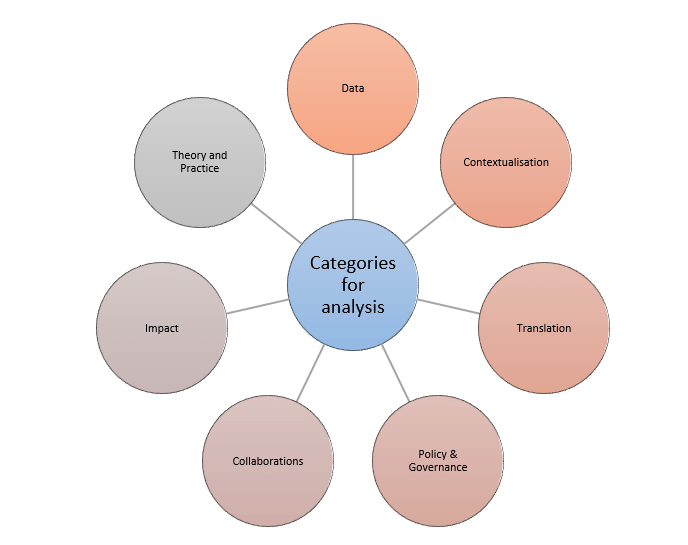
In the previous post, I broadly discussed the primary findings from the five pilot interviews I conducted – issues related to data, and contextualisation of models. Here, I take the case study of Vinay’s team to examine the issue of data, and its implications for practice, in greater detail. Vinay is a professor of civil engineering from a reputed university in Bangalore, whose group works on transportation simulation and policies. I examine the process by which Vinay and his group overcome the lack of access to data, and the resulting practices that emerge. In this project, I use the lens of practice, borrowing concepts of Communities of Practice, and technology enactment – and in this post I lay the foundations of the same.
-

Identity and Download Culture: Revolution or Farce?
Caste is a systematic, oppressive structure that operates in the whole of Indian society as well as in my own location in Khandesh. This oppression exists within the strict binaries of identity and prevents liberation. The free market economy, in the context of ‘download work’, holds out the promise of liberation. This post narrates my story along with Akshay and Ganesh related to our ‘download work’. All of us belong to the Dalit – Adivasi community, and currently Akshay and Ganesh are employed in download work to support themselves and their families. ‘Download work’ becomes an option for livelihood, but does this work help them develop themselves more eclectically?…
-

The Quest for Bodoland: Social Media in the Time of a Separatist Movement – Part One
In the first part of this two-part post, I aim to give a brief political history of the Bodoland movement which lays the ground for the rise of social media that has come to both inform and participate in the political situation in the region. The growing role of social media, as I see it, continues to reach out to a larger audience who take an interest in the movement for numerous reasons. Popular social media websites like Facebook and YouTube, which I focus on, have become points of dissemination for various types of news and information, thereby making it a multi-purposive platform…
-

Data, Contextualisation, and Simulation Design: Findings from Pilot Interviews
After completing my undergraduate degree in Computer Science and Engineering, I joined a research organisation which looked at infrastructure and policy studies, using gaming and simulation methods. A year and a half later, I was one of the co-founders of Fields of View, a research group using gaming, modelling and simulation methods to study cities. Over the course of the last few years, working on projects where computer simulations have played a crucial part got me interested in understanding where these technologies come from, who uses them, and how…
-

Data, Downloads and Gaming Dens: Digital Networks in Informal Settlements
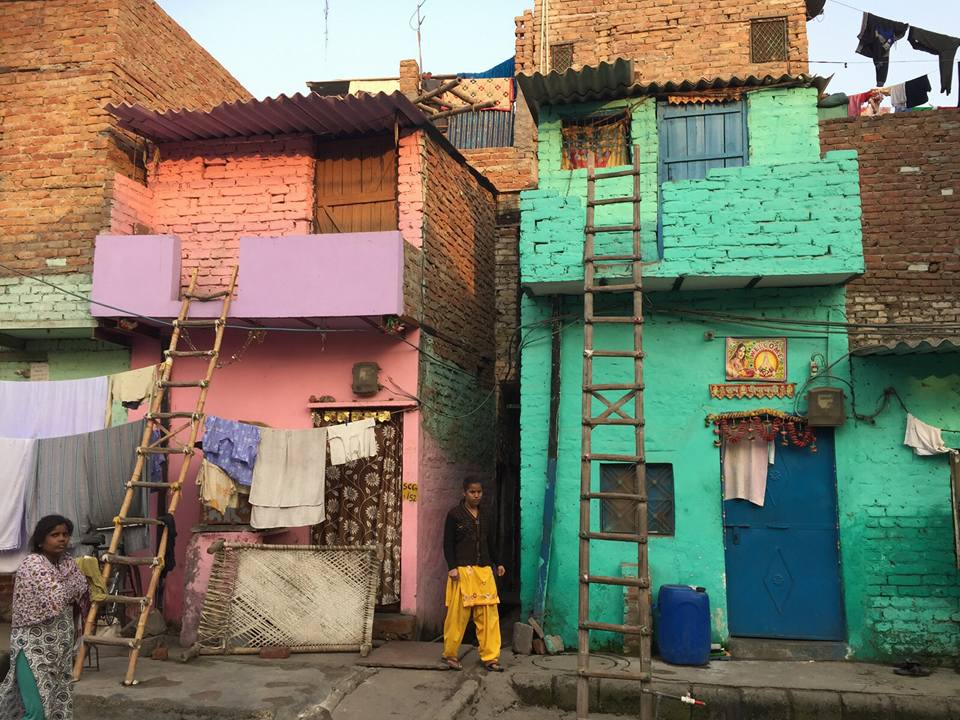
My research over the last few weeks has dealt with exploring the networks of digital consumption in two of Delhi’s informal settlements – Govindpuri and Sundernagri. Both are JJ clusters[1] or squatter settlements[2] that sprang up in the 1970s, along what were then the fringes of the city, around the time of the Emergency[3] when mass slum clearing operations were undertaken. Personal accounts in my interviews have revealed how the lives of many of the residents there were directly affected by two major projects undertaken by Sanjay Gandhi [4]. The first was the ‘city beautification’ program that led to the eviction of thousands of families in JJ clusters and the second was the ‘population control’ program implemented through mass sterilizations, which were forced in many cases…
-

Digital Identities: The Online Circulation of Bodo VCD films and Music Videos
The demand for Bodoland, a separate state from Assam, has garnered national attention in the last few decades because of the violence and insurgency that has ensued in its wake. In recent times, the Bodo agitation has become an important component in the political discourse of Assam, and remains a complex and emotive issue.[1] There has been considerable focus within the Bodo community on this issue that is linked with questions of identity, culture and language. Additionally in the last two decades, there has been an emergence of locally made low-budget productions due to the availability of affordable digital technology…