Publications
-

Video Workshop Report
The arrival of video ushered in a new logistics of access, circulation and production of audio-visual forms. Analog video introduced new infrastructures and legal contests for film circulation and viewing cultures, set new terms for amateur and professional practices in home videos, documentary and commercial works, pedagogical practices and civil society activism, and has been…
-

BioScope Volume 5 Number 2, July 2014, Special Issue: Pakistani Cinema
The July 2014 issue of BioScope: South Asian Screen Studies is now available both in print and online. The special issue is available for free online. The access will be free for the whole month of April Guest Editors Ali Nobil Ahmad and Ali Khan Contents Introduction to Special Issue Film and Cinephilia in Pakistan:…
-

BioScope Volume 5 Number 1, January 2014
The January 2014 issue of BioScope: South Asian Screen Studies is now available both in print and online.
-

Call for Papers: BioScope – ‘Regional Cinemas of India’ and ‘Videogame Cultures in South Asia’
BioScope: South Asian Screen Studies invites paper abstracts for two upcoming special issues, focusing on ‘Regional Cinemas of India’ and ‘Videogame Cultures in South Asia.’ Guest editors for these issues will be S.V. Srinivas and Padmini Ray Murray, respectively.
Interested authors may send abstracts of no more than 500 words by October 15, 2014, for both the special issues. Final papers should be 6000-8000 words long and are due on January 15, 2015. All papers will be reviewed through a blind peer review process.
-

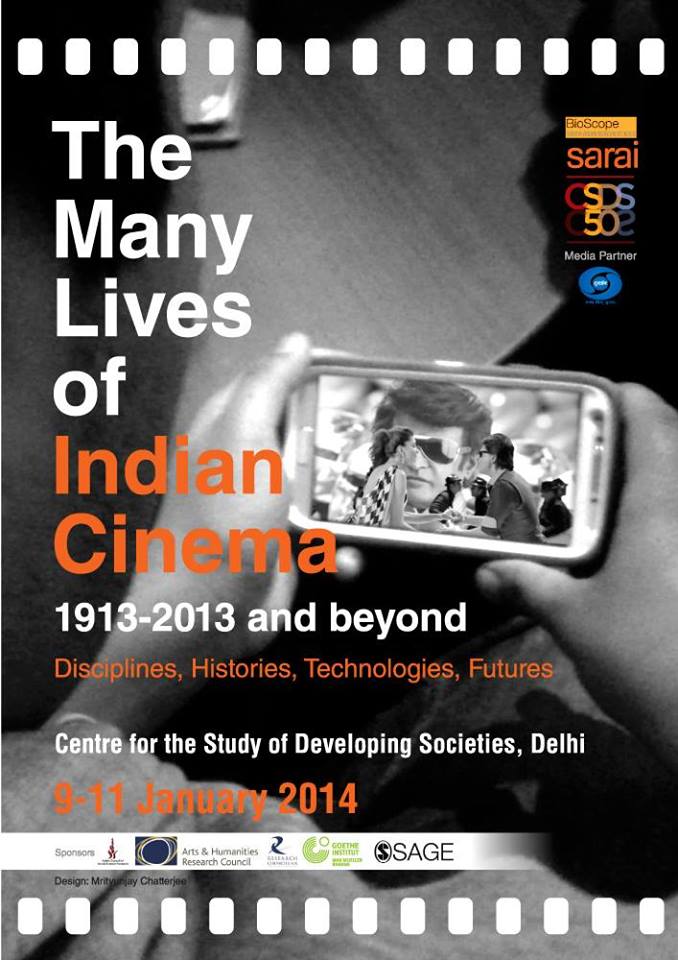
The Many Lives of Indian Cinema: Conference Report
This conference was part of the golden jubilee celebrations of the Center for the Study of Developing Societies and was organized by The Sarai Programme to commemorate 100 years of Indian cinema. The conference sought to draw on the diverse heritage of Indian cinema to highlight the importance of cinema studies in the wider architecture…
-

The Many Lives of Indian Cinema: Conference Report
This conference was part of the golden jubilee celebrations of the Center for the Study of Developing Societies and was organized by The Sarai Programme to commemorate 100 years of Indian cinema. The conference sought to draw on the diverse heritage of Indian cinema to highlight the importance of cinema studies in the wider architecture of disciplinary engagements. This was with a view to bringing cinema into the academy as subject matter that required not only specialist analysis, but also as something which offered fresh perspectives, methods and materials to the human sciences.
-

Sarai Reader 09: Projections
A projection always involves an incandescent transference, some crossing of a void or darkness to effect luminous landings on a distant surface. Without projections, we would have no cinemas, no city plans, no forecasts, no wagers, no fantasies. Projections convect questions, magnify dreams and illuminate desires. Sarai Reader 09: Projections translates this imperative to act as a transport of illumination to build an axis of central questions…
-

City as Studio
The City as Studio programme emerged in 2010 to intervene in the shaping of a responsive and engaged milieu of contemporary art and media practices through a cluster of dedicated art and media fellowships tied to a structure of studio situations and processes in Delhi. The fellowship brings together artists, media practitioners, intellectuals, writers, activists, and a variety of audiences alongside a series of cultural and artistic practices in the city of Delhi.
-

The Water Cookbook
The Water Cookbook presents ideas from the Sarai project on peri-urban sustainability in Ghaziabad, India. It is a short graphic novel combining pictures with brief stories from daily life in the city.
-

No Apologies for the Interruption
Power creates rules, makes many implements to reign in possibilities and the impulses to create. But force of life cannot be contained; it bursts through anyway. Energy travels from body to body; each environment germinates countless more. It is of such questions, imaginations and collisions that No Apologies for the Interruption is an expression.